
Replicating a Nature autism study in <30 minutes?
Yes, that world is here - and we're leaning into it

Scientific replication used to be a months-long endeavor involving specialized labs, expensive hardware, and a team of postdocs. I just did a Nature-level bioinformatics replication in the time it took to order tea at Starbucks.
To put ApexClaw - an autonomous AI platform for science that we just released on GRAIL - through its paces, I decided to see if it could handle a complex study on the genetic foundations of autism. Specifically, I targeted the experiment recently reported by Edison Scientific, where their KOSMOS AI scientist reproduced findings from a landmark Gordon et al. paper originally published in Nature.
The original study is heavy lifting. It involves analyzing transcriptomic profiling (RNA-seq) of cortical organoids to map how different genetic risk factors for Autism Spectrum Disorder (ASD) affect brain development. We’re talking about pulling massive datasets from the Gene Expression Omnibus (GEO), running complex clustering analyses, and mapping divergence-convergence trajectories across developmental stages.
Here is how I did it:
I went to the Edison Scientific site, took a screenshot of the prompt they used for their KOSMOS agent, and uploaded it to ApexClaw through my browser (see below).
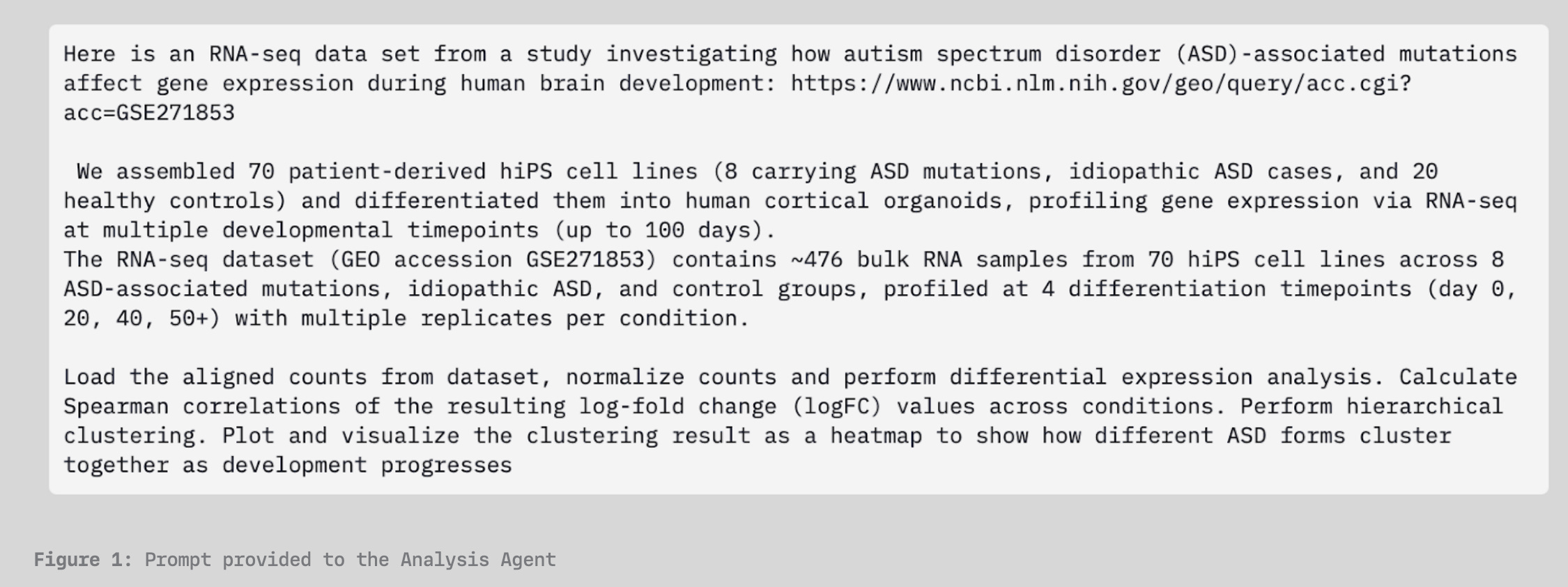
ApexClaw runs using an OpenClaw-like system, hosted on our own web servers in cloud infrastructure. Because it’s fully autonomous, I didn’t have to write a single line of code or set up an environment. Once I gave it the image, the platform performed OCR to understand the instructions and immediately got to work.
While I was waiting for my drink, ApexClaw:
Identified and downloaded the relevant data from the GEO repository.
Planned the entire analytical pipeline, identifying the specific bioinformatic tools required.
Installed all necessary dependencies and tools on the fly within the cloud environment.
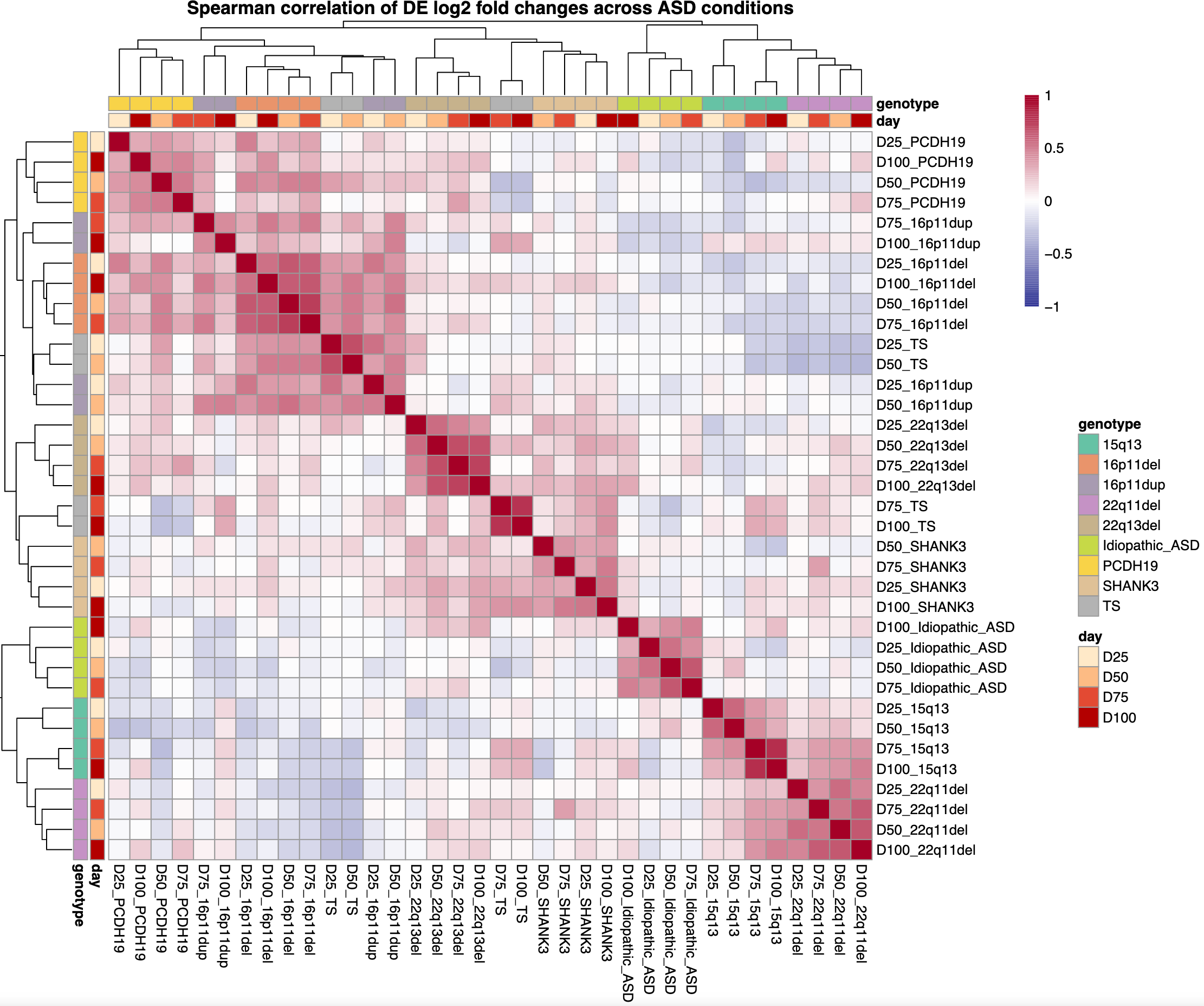
Conducted the full analysis, replicating the genotype-linked clusters and developmental heatmaps.
Below is the heatmap produced by ApexClaw…
…and side-by-side, the corresponding heatmaps from KOSMOS (B) and the original Nature Paper (A).
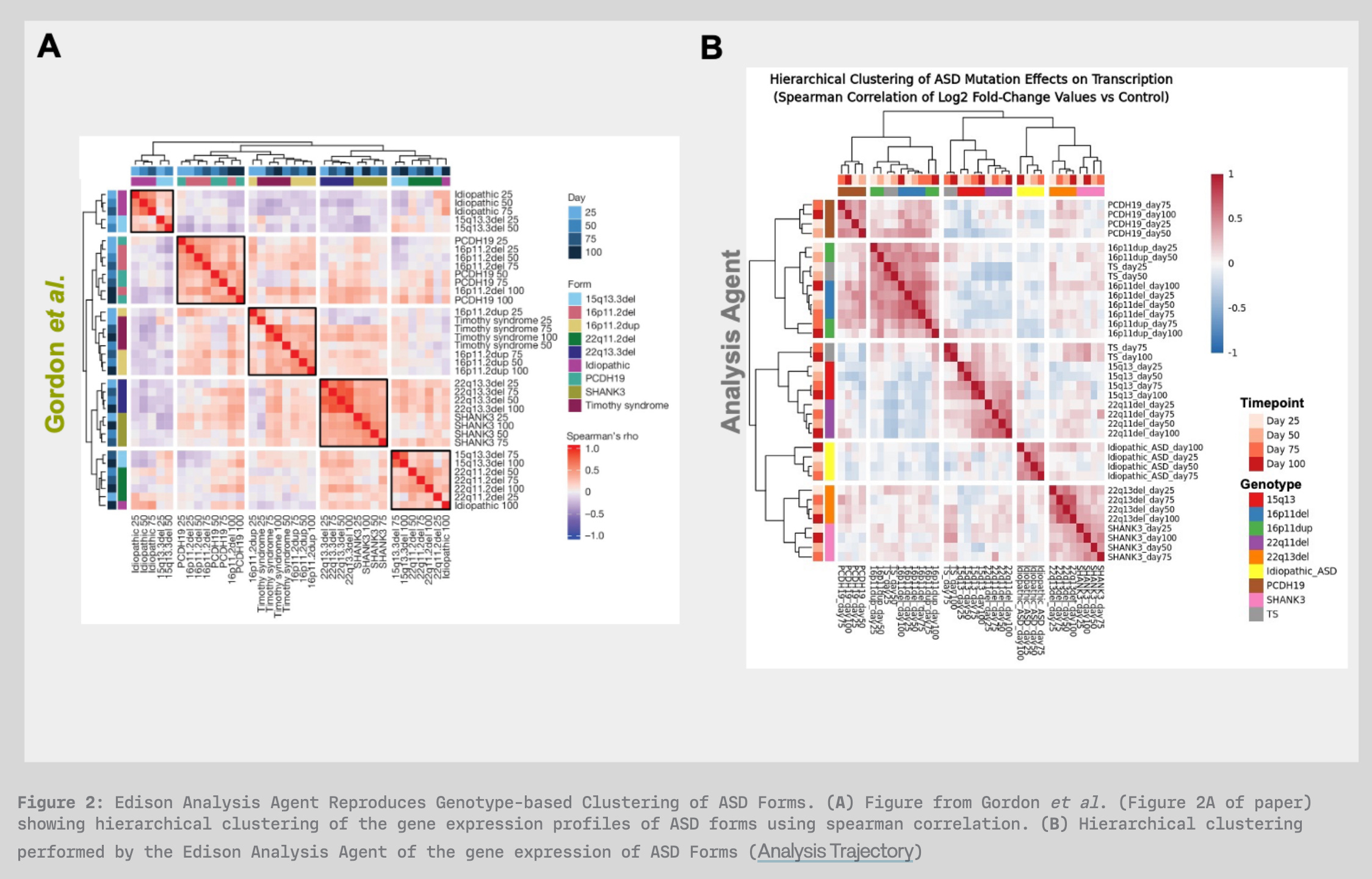
By the time I sat down with my tea, the job was done.
ApexClaw didn’t just give me the results; it provided a detailed report comparing its findings to the original case study. It noted a few minor differences in the clustering output and, more importantly, explained why they occurred, pointing to specific ways in how it handled certain data variance (such as using average link clustering rather than complete link clustering) compared to the original KOSMOS run. The best part is that I could do the whole thing in less than $5 of computational effort.
This is the shift we’ve been waiting for. The democratization of science isn’t just a nice idea - it’s here. With tools like ApexClaw, we can tackle significantly larger problems at a fraction of the traditional time and cost. It also removes the last remaining excuses for black-box science. If an AI can replicate your study from a screenshot, there is no reason for any researcher to keep their data or methodology closed to external validation.
We are moving into an era where the bottleneck is no longer the labor of analysis, but the quality of our questions. We also need to start rewarding the people who collect the primary data, be it gene sequencing or qualitative interviews (for social science studies) that then make such studies possible. We need to re-think our incentive structures governing institutional science.